The world we live in today didn’t appear out of nowhere. Every aspect of modern life connects to something that happened before – from the way we govern ourselves to the technology we use daily, historical events have carved the path we walk on. Many people explore historical topics through educational websites and enjoy different cultural website designs on various online resources, including platforms like amerikaanseonlinecasino.com. This knowledge gives us perspective on why things are the way they are.
History isn’t just about memorizing dates and names. It’s about recognizing patterns and understanding cause and effect.
Political Systems Born from Revolution
Democracy’s Revolutionary Roots
The French and American revolutions changed how people think about government forever. These uprisings introduced concepts like individual rights and representative democracy. Before these events, monarchies ruled most of the world.
Today’s democratic nations trace their foundations to these revolutionary periods. The ideas of freedom and equality that emerged still drive political debates. Even countries that aren’t fully democratic reference these principles.
Citizens now expect to have a voice in governance. This expectation stems directly from revolutionary ideals.
The Cold War’s Lasting Shadow
The tension between the United States and the Soviet Union shaped global politics for decades. This rivalry influenced everything from space exploration to military spending. Even though the Cold War ended, its effects persist.
Current geopolitical tensions often mirror Cold War dynamics. Nations still form alliances based on ideological differences. The nuclear arms race that began then continues to affect international relations. Many modern conflicts have roots in Cold War-era decisions.
Technology Advances Driven by War
Military necessity has pushed technological innovation throughout history. Many everyday items started as military projects. War creates urgency that accelerates development in unexpected ways.
Consider these technologies that came from military needs:
- The internet began as a military communication system.
- GPS was developed for navigation during conflicts.
- Microwave ovens emerged from radar technology.
- Digital photography advanced through aerial reconnaissance.
- Synthetic materials replaced scarce wartime resources.
These inventions now serve peaceful purposes. They’ve transformed daily life far beyond their original intent. The pattern continues today with new technologies.
Economic Models Shaped by Crisis
The Great Depression’s Lessons
The 1929 stock market crash taught the world about economic vulnerability. Governments learned they needed to regulate financial markets more carefully. Banking systems changed dramatically after this crisis.
Modern economic policies still reflect Depression-era lessons. Social safety nets emerged from this period. The idea that governments should protect citizens from economic disaster became accepted. Financial regulations today aim to prevent similar collapses.
Globalization Through Trade History
Historical trade routes like the Silk Road connected distant civilizations. These connections laid the groundwork for today’s global economy. Merchants spread not just goods but ideas and innovations.
Modern supply chains are far more complex but follow the same basic principle. Different regions specialize in what they do best. Products now contain components from dozens of countries. International trade agreements echo ancient trading partnerships.
Cultural Exchange Throughout Centuries
Migration and conquest have always mixed cultures together. This blending created the diverse societies we see today. No culture exists in isolation anymore.
Language Evolution
Languages absorb words from other tongues through historical contact. English contains Latin, French, and Germanic roots due to invasions and trade. This linguistic mixing continues as cultures interact online.
New words enter our vocabulary constantly. Technology and social media accelerate this process. The way we communicate today reflects centuries of cultural exchange.
Artistic Movements and Their Impact
Renaissance ideas about humanism still influence modern thought. Artistic movements often reflected broader social changes. The Enlightenment promoted reason and science over superstition.
These philosophical shifts changed how people view the world. Modern education systems emphasize critical thinking partly because of Enlightenment values. Art movements documented and sometimes drove social progress.
Social Movements That Changed Society
Historical protests and movements created the rights we enjoy today. Change rarely happens without struggle. Past activists paved the way for current freedoms.
Key achievements from social movements include:
- Women’s right to vote and own property.
- Civil rights protections against discrimination.
- Labor laws ensure safe working conditions.
- Environmental regulations protecting natural resources.
- Universal education access in many countries.
Each victory was built on previous efforts. Modern activists use tactics refined over generations. The fight for equality continues, but rests on historical foundations.
Why Understanding History Matters Now
Learning from the past helps us avoid repeating mistakes. Historical patterns often repeat when people ignore warning signs. Current challenges frequently have historical precedents.
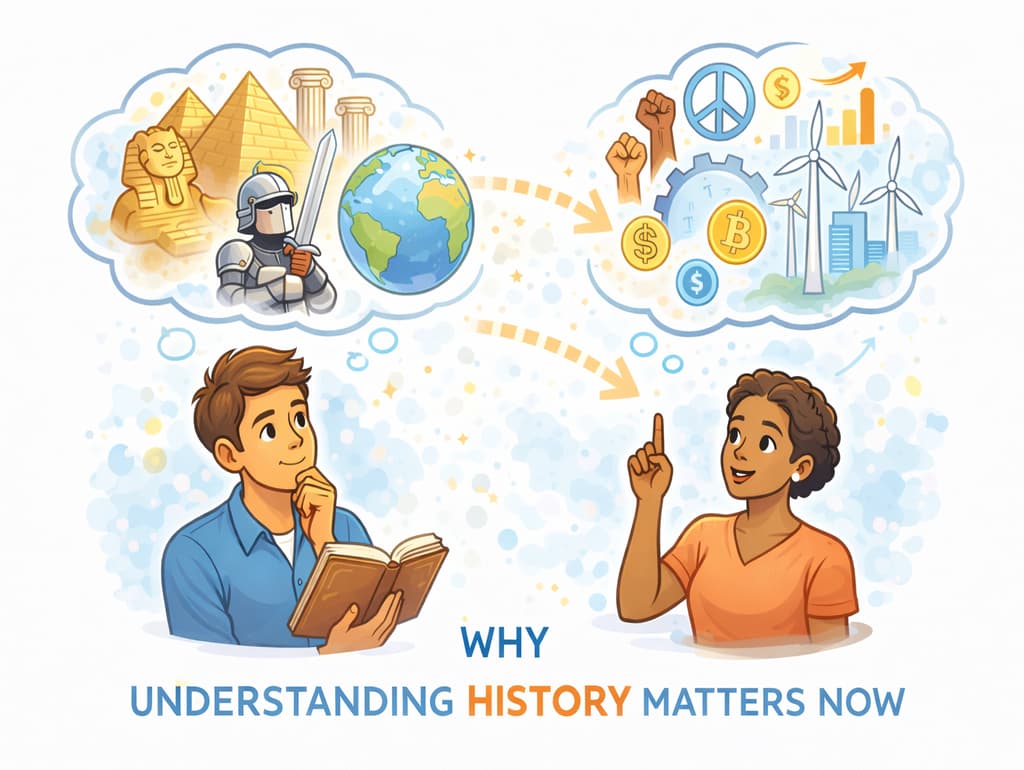
Climate change discussions benefit from understanding past civilizations that collapsed due to environmental issues. Political polarization today mirrors previous divisive periods. Economic inequality has risen and fallen throughout history.
Does history actually repeat itself? Not exactly, but it definitely rhymes.
Studying historical events gives us tools to navigate modern problems. We can see what worked and what failed. This knowledge empowers better decision-making today.
The connections between past and present run deeper than most people realize. Every modern institution, technology, and social norm has historical roots worth exploring.